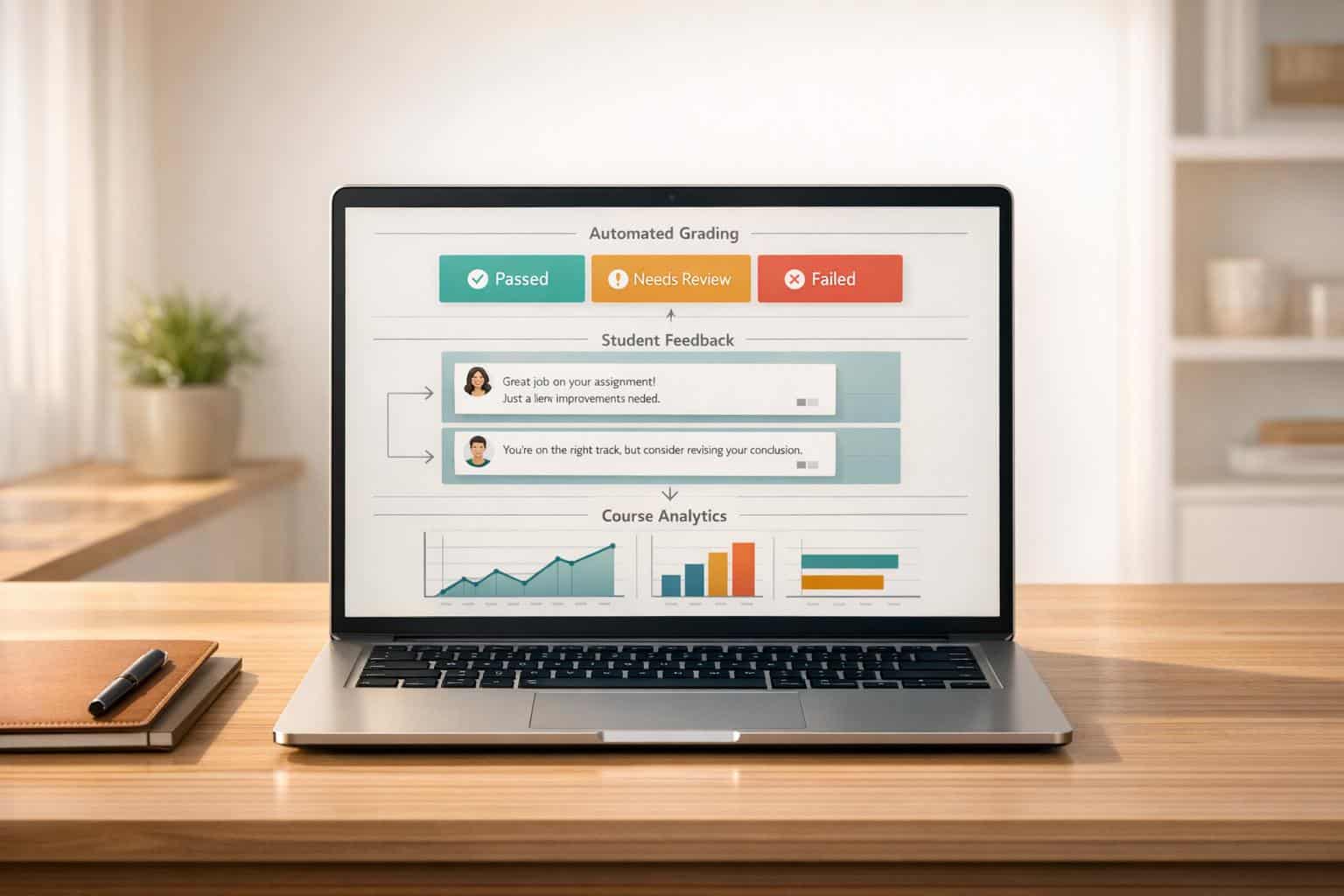
AI feedback systems are reshaping online education by addressing the challenge of providing personalized, timely feedback to large student cohorts. These tools use machine learning and natural language processing to evaluate assignments, track engagement, and offer tailored guidance. Key benefits include faster grading, improved accuracy, and scalability for large classes. However, challenges like potential inaccuracies, data privacy concerns, and the need for human oversight remain.
Top systems include:
- LearnWise: Integrates with LMS platforms for feedback based on rubrics and course materials, reducing grading time by 80%.
- Gradescope: Groups similar student responses to streamline grading, ideal for STEM and large classes.
- Cognii: Uses conversational AI for open-ended responses, guiding students through Socratic dialogue.
- D2L Lumi Feedback: Embedded in Brightspace LMS, providing rubric-aligned feedback and analytics for early interventions.
- CYPHER Learning AI: Automates assessment creation and tracks student progress with personalized rubrics.
Each system has strengths suited to specific needs, but a hybrid approach combining AI efficiency with human expertise is often the most effective solution.
How I use AI to grade and give QUALITY feedback
sbb-itb-4bfa3ba
What Are AI Feedback Systems?
AI feedback systems are digital tools designed to evaluate submissions and provide tailored guidance with minimal input from instructors. Using machine learning and natural language processing, these systems can assess everything from coding assignments to essays, offering personalized support to students.
These systems handle a variety of tasks. They track student engagement by monitoring metrics such as attendance and participation in forums, helping identify students who might be struggling. They provide human-like feedback through models like GPT-4, deliver real-time hints for challenging problems, and analyze student reflections to encourage goal-setting and effective time management. Additionally, they assess submissions against predefined rubrics, offering clear and objective suggestions for improvement.
The technology behind these systems includes deep learning methods, such as recurrent neural networks for identifying at-risk students, natural language processing and rule-based algorithms for grading, and large language models for ongoing tutoring. Many platforms also feature analytics dashboards, empowering students to monitor their progress effectively. These capabilities highlight the range of approaches used by different platforms, setting the stage for real-world application and validation.
A notable example comes from Stanford University‘s ProtoTransformer Network. During its Code in Place course in June 2021, the system delivered 16,000 feedback responses on Python code to over 12,000 students. Impressively, it achieved a 97.9% student approval rate, surpassing the 96.7% approval rate for human feedback. This demonstrates how AI feedback systems have evolved from simple automated grading tools into essential components of modern online education.
1. LearnWise AI Feedback & Grader
LearnWise takes AI feedback systems to the next level by integrating directly into popular Learning Management Systems (LMS) like Canvas SpeedGrader, Brightspace Grader, and Moodle. This seamless connection allows instructors to generate feedback within the platforms they already use. The tool evaluates student submissions against rubrics, course materials, and instructor annotations, producing detailed feedback that instructors can review and edit before sharing with students.
Personalization Accuracy
LearnWise employs a "walled-garden" approach, meaning the AI only accesses institution-approved content like syllabi, course materials, and official forums. This ensures academic integrity and prevents AI errors, often referred to as "hallucinations". Instructors can tailor the tone, length, and detail of feedback to suit their teaching style. Additionally, an "AI Brain" layer ensures consistent, rubric-based responses across various language models. At one institution with over 40,000 students, 84% of learners preferred AI-generated feedback over traditional methods. This level of customization makes LearnWise a standout solution for LMS integration.
LMS Integration
Getting started with LearnWise is quick and straightforward, requiring just 3–7 business days for setup and 3–5 weeks for full onboarding. The system uses LTI 1.3 for integration and supports SAML and OAuth authentication, eliminating the need for coding or extra tools. After implementation, institutions report a 30% to 40% drop in Tier-1 IT support requests and a 62% faster resolution time for cross-departmental issues.
Workload Reduction
By using LearnWise, instructors can grade assignments up to 80% faster, significantly cutting down the time spent on grading by using AI automation tools and workflows. For example, educators who typically spend five hours per week grading save approximately 140 hours over a 28-week period.
Rohim Mohammed, a lecturer at University College Birmingham, noted, "It has the potential to improve speed, consistency, and detail in feedback for educators grading students’ assignments".
The platform also includes an analytics dashboard that tracks faculty usage and edits to AI-generated feedback. This helps institutions pinpoint learning gaps and improve curriculum design.
Scalability for Large Cohorts
LearnWise is particularly effective for large student groups, offering scalable solutions that maintain quality feedback. For instance, UMass Global collaborated with LearnWise in 2025–2026 to enhance its competency-based education (CBE) model for MBA courses.
Andrea Munro, Associate Vice Chancellor of Instructional Innovation at UMass Global, shared, "Our partnership with LearnWise AI has enabled us to co-design feedback that is growth-minded, actionable, and aligned to mastery. Together, we’re building tools that support learners and elevate how instructors guide performance and progress".
Between August and December 2024, twelve UK institutions piloted LearnWise through Jisc. Eight of these institutions transitioned to paid subscriptions after the trial, citing the system’s ability to handle complex queries with both accuracy and empathy.
2. Gradescope by Turnitin
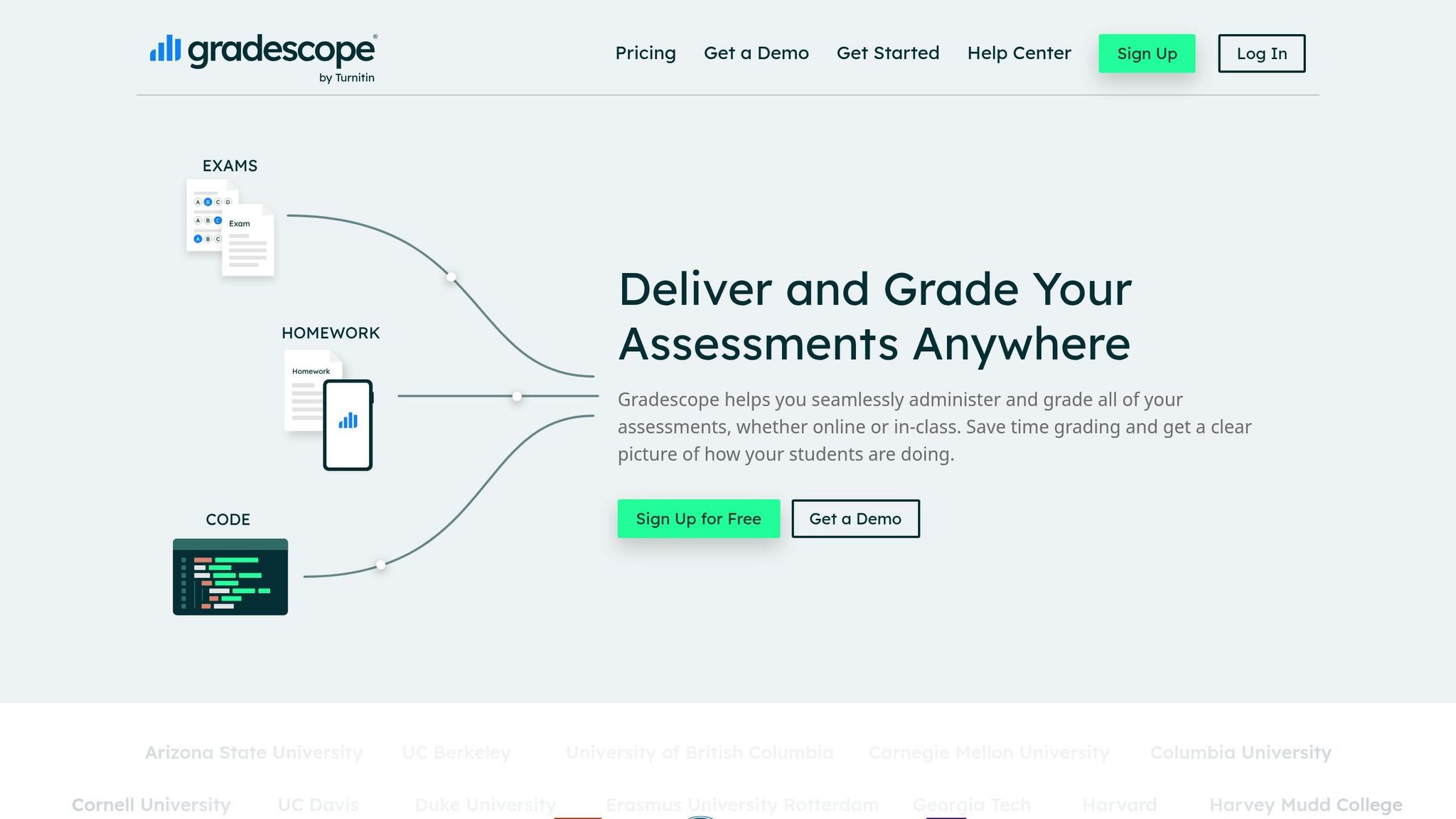
Gradescope leverages AI to group similar responses – whether they are short answers, multiple-choice, handwritten math solutions, or diagrams – allowing instructors to provide a single, detailed comment for each group of errors. This system has been adopted by 2,600 universities and 140,000 instructors, who have collectively graded over 700 million questions using the platform.
Personalization Accuracy
One of Gradescope’s standout features is its dynamic rubrics, which let instructors create or update grading criteria as they work. For example, if a new type of student error is identified midway through grading, a rubric item can be added, and this adjustment will automatically apply to all previously graded submissions. This ensures fairness and consistency across the board. To further promote unbiased evaluation, Gradescope includes anonymous grading, where student names and identifiers are hidden during the review process.
Instructors maintain full control over feedback, with options for manual overrides and custom comments. The platform is versatile, supporting a variety of assignment types, from handwritten submissions to programming code with autograding. This makes it suitable for courses across STEM, humanities, and social sciences. According to user surveys, 45.6% of instructors believe that Gradescope’s rubric system helps students better understand and learn from their mistakes.
LMS Integration
Gradescope integrates smoothly with major Learning Management Systems (LMS) like Canvas, Blackboard, Brightspace, Moodle, and Sakai through LTI 1.3 and Single Sign-On (SSO). This integration ensures that student rosters are automatically synced between the LMS and Gradescope, eliminating the need for manual data entry. It also keeps enrollment details up to date, regardless of class size. Grades are sent directly to the LMS gradebook, reducing the chance of administrative errors and ensuring students receive timely feedback. This level of synchronization significantly cuts down on the time spent managing grades.
Workload Reduction
Gradescope’s digital workflows and AI-powered grouping can reduce grading time by up to 80%, with 67% of users reporting at least a 30% time savings. Additionally, 60.9% of instructors strongly agree that the platform saves them valuable time.
"The faculty have really taken Gradescope on board and my colleagues have said it is brilliant and is making our life much easier", shared Dr. Alison Voice, Senior Lecturer in Physics at the University of Leeds.
The platform also features an "Item Analysis" page, which highlights questions where a significant number of students struggled. This allows instructors to address these areas with targeted lessons or interventions.
Scalability for Large Cohorts
Gradescope’s ability to scale makes it especially effective for large classes. A case study conducted by Indiana University in December 2024 examined its use in large lecture courses with over 100 students. By adopting Gradescope, instructors managed high volumes of assignments while maintaining consistent grading, even across multiple graders. The study found that during the semester Gradescope was implemented, DFW (D, F, and Withdrawal) rates dropped, and average course grades improved. Instructors reported greater grading efficiency and noted higher levels of student satisfaction.
The platform’s AI-assisted grouping ensures that identical errors receive consistent, detailed feedback, regardless of the grader. Survey results show that 46.4% of users strongly agree and 33.3% agree that Gradescope helps them grade more fairly.
3. Cognii Virtual Learning Assistant
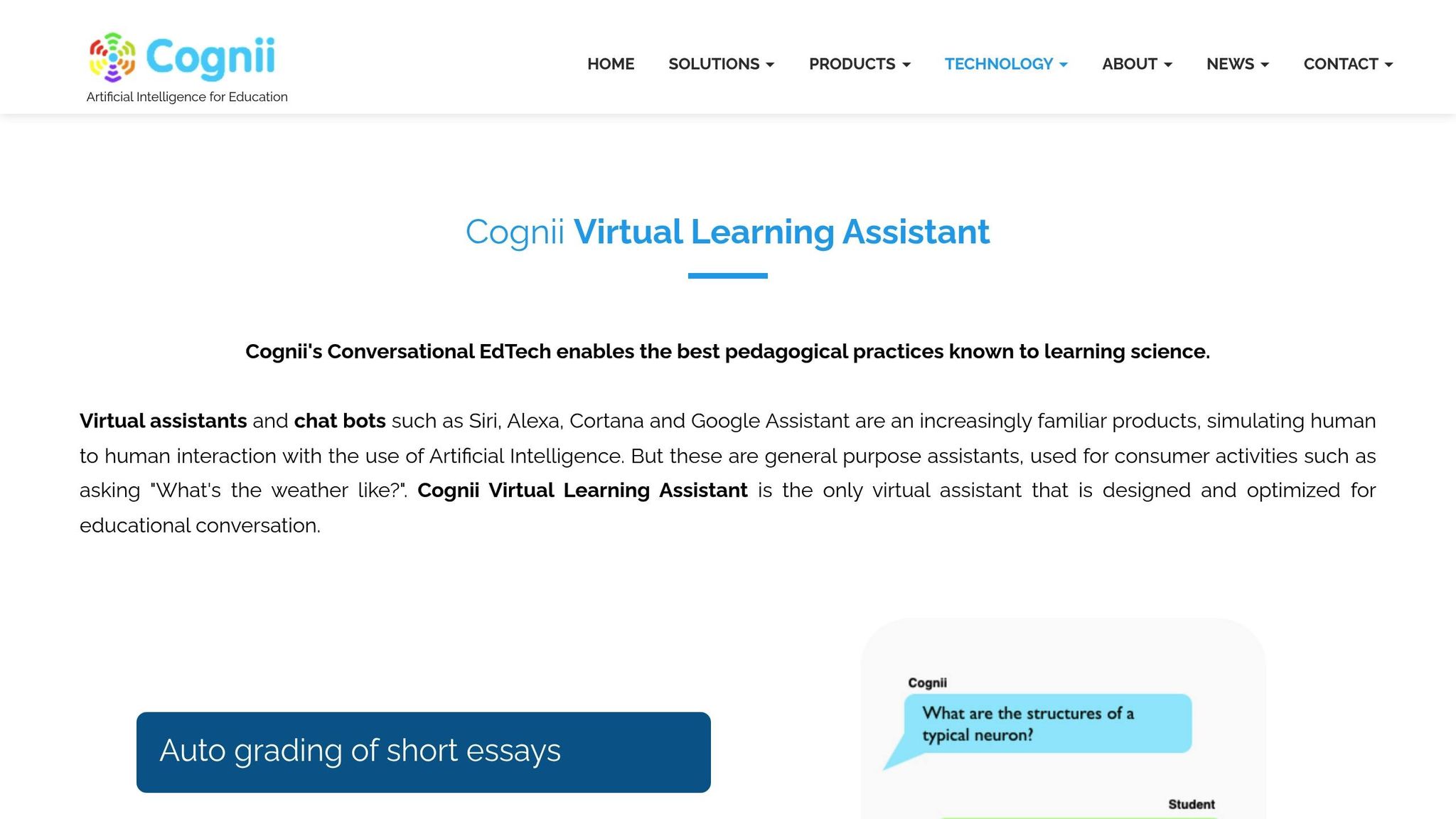
Cognii Virtual Learning Assistant uses conversational AI to guide students toward correct answers through Socratic dialogue. By evaluating open-ended responses, it leverages proprietary NLP algorithms to analyze syntax, semantics, and concept hierarchies, pinpointing which concepts are understood and which are missing.
Personalization Accuracy
Cognii’s design ensures highly precise feedback by evaluating student responses on multiple levels: sentence structure, contextual meaning, and the presence of key concepts. This approach goes beyond basic grammar checks to assess deeper understanding. In a controlled study, Cognii’s evaluation system achieved a 96% accuracy rate when compared to human graders. The platform also improves over time, using machine learning to enhance its scoring and feedback capabilities as it processes more data.
"Cognii Virtual Learning Assistant is the only virtual assistant that is designed and optimized for educational conversation." – Cognii
LMS Integration
Cognii seamlessly integrates with major Learning Management Systems (LMS) through LTI or API connections. Educators collaborate with Cognii to create curriculum scripts tailored to its format, which are then deployed within their existing LMS. This integration includes an administrative dashboard offering detailed analytics to identify concept-level knowledge gaps. Field testing has shown that student satisfaction rates with Cognii exceed 95%.
Workload Reduction
Grading short essays and open-ended responses can be time-consuming, but Cognii automates this process, significantly reducing grading hours through automation. Acting as a virtual tutor available 24/7, it allows students to revise and improve their responses multiple times until they achieve mastery – all without requiring direct instructor involvement.
"Cognii’s VLA is not only a valuable tool for students; it also offers numerous advantages for faculty. To begin with, it greatly reduces the need for coordinating face-to-face remedial interventions that are both time-consuming and hard to scale", notes Virtually Inspired.
Scalability for Large Cohorts
Cognii’s conversational AI delivers personalized, one-on-one tutoring at a scale that would be nearly impossible to achieve manually. This makes it an excellent choice for institutions managing courses with hundreds or even thousands of students. It is also highly adaptable, supporting learners from grade 3 to higher education and corporate training environments. This scalability underscores its value in modern online education.
4. D2L Lumi Feedback
D2L Lumi Feedback is an AI-powered tool seamlessly integrated into Brightspace LMS, creating a unified teaching experience for educators and students alike. By using educator inputs and course materials, it generates personalized, rubric-aligned feedback tailored to each student’s needs.
Personalization Accuracy
The effectiveness of D2L Lumi Feedback in delivering relevant and meaningful feedback depends heavily on the quality of the content provided by educators within Brightspace. The tool analyzes this input to craft responses that align closely with the instructor’s teaching style. Importantly, strict privacy measures ensure that customer data is not used to train the AI model. Studies show that feedback generated by large language models (LLMs) can improve student revision performance (d = 0.19), increase task motivation (d = 0.36), and foster positive emotions (d = 0.34) compared to receiving no feedback at all.
"The accuracy of the questions was good. Given that this capability is integrated within D2L Brightspace and questions are based on content created in Brightspace is convenient to use." – Dr. Elizabeth Pearsall, Vice President of Teaching and Learning, The American College of Financial Services
This level of personalization ensures that the tool fits naturally into existing teaching workflows.
LMS Integration
D2L Lumi is fully embedded into Brightspace, offering a smooth adoption process with minimal effort required from educators. With a 4.4/5 rating on G2 and recognition through the Artificial Intelligence Excellence Award, its usability has been well-received. Educators can simply drag and drop course materials into Lumi, allowing the tool to generate feedback that integrates directly into question libraries and grading workflows. For institutions using external systems, D2L Link provides connections to platforms like Salesforce and Workday while supporting standards such as LTI Advantage (1.3), SCORM, and xAPI.
"The interface integrates seamlessly, feeding directly into the question library, which has been well received." – Laura Herring, Coordinator of Technology Integration, Gwinnett Online Campus
This streamlined integration reduces barriers to adoption and enhances overall efficiency.
Workload Reduction
D2L Lumi significantly lightens the workload for educators by automating tasks like quiz creation and course workflows, assignment ideas, and discussion prompts – reducing course development time by 30%. Its human-in-the-loop approach ensures that educators review and approve AI-generated content before it reaches students, maintaining high standards of quality. Integrated AI tools save time in 85% of cases compared to just 51% with non-integrated solutions. Additionally, dashboards within the platform help identify at-risk students early, enabling timely interventions.
"Lumi Quiz was fast enough to keep up with me. I think that is so key. It made me realize that I could use this constantly and reliably if I was in course-building mode." – Jordan O’Connell, Professor, Northwest Iowa Community College
This combination of automation and oversight ensures both efficiency and reliability for educators.
Scalability for Large Cohorts
D2L Lumi’s design supports large student populations without sacrificing the quality of personalized feedback. Lumi Chat, an integrated feature, resolves 80% of student inquiries in under three minutes, reducing the need for instructor involvement. Institutions using adaptive learning models within the platform report a 26% improvement in test scores. Additionally, the tool’s ability to generate diverse question variants makes it particularly useful for managing large classes.
5. CYPHER Learning AI Assessments
CYPHER Learning AI Assessments stands out as a tool designed to make both teaching and learning more efficient. By leveraging its CYPHER Agent, the platform automates 80% of assessment creation and management tasks. It aligns quizzes, rubrics, and assignments with specific skills and competencies, ensuring that feedback ties directly to learning goals. With 16 diverse assessment types – ranging from quizzes and essays to debates and peer-reviewed assignments – educators have plenty of options to evaluate student progress.
Personalization Accuracy
The CYPHER Agent takes personalization to the next level by generating rubrics tailored to individual competencies. These rubrics come with custom criteria, ensuring consistent and precise scoring for every learner. The system also creates personalized learning paths based on each student’s digital profile and the competencies they need to develop. Through mastery grids, educators can easily track progress for every skill, identify gaps, and provide targeted feedback. This method ensures feedback is specific and actionable.
"It adapts very well to a modern teaching and assessment system. The assessment done with the platform meets contemporary demands." – Renzo Forlin, Director General, Colegio Alpamayo
A survey of 153 schools revealed that 92% reported improved student engagement and institutional transformation after using CYPHER. This precision not only enhances learning outcomes but also significantly reduces the administrative workload for educators by automating repetitive tasks.
Workload Reduction
CYPHER simplifies educators’ responsibilities by automating tasks like question bank generation, rubric creation, gradebook updates, and onboarding. These features can cut instructor workloads by up to 40%. Built-in annotation tools allow teachers to provide detailed feedback directly on PDFs, making evaluations more nuanced. Additionally, the platform maps state or national standards to course competencies, automatically generating evidence that students meet these benchmarks.
"We are really excited about being able to tie the state or national standards as competencies… This shows schools evidence that students are meeting standards." – Dani Bates, Executive Director STEM Initiatives, 21stCentEd
Scalability for Large Cohorts
CYPHER’s cloud-based, modular architecture is designed to handle large and diverse groups of learners without performance issues. Its AI-driven rubrics and mastery grids ensure consistent evaluation across even the largest classes. With support for over 50 languages, the platform is ideal for institutions with a global reach. The Learning Meter feature tracks how much time students spend actively engaging with assignments and content, offering valuable insights into effort and participation across large cohorts.
Strengths and Weaknesses
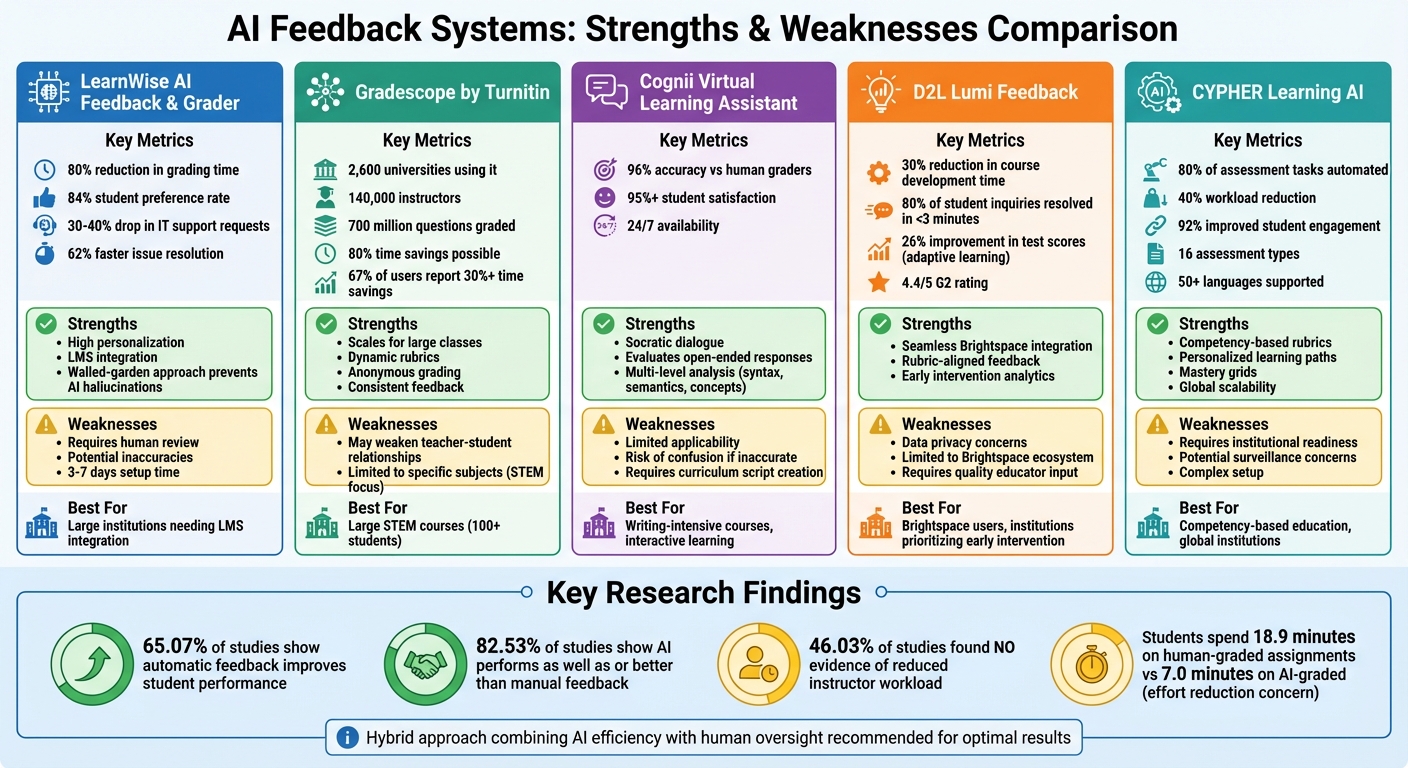
Comparison of Top 5 AI Feedback Systems for Online Education
AI feedback systems offer immediate, personalized responses that help students address gaps in understanding while the material is still fresh. Research shows that automatic feedback can enhance student performance. These systems can handle assignments at scale and leverage analytics to pinpoint students who may be at risk. However, these advantages come with some notable challenges.
One significant issue is that while AI saves time on grading, it introduces new demands for system management and validation. Interestingly, 46.03% of studies found no evidence that automatic feedback actually reduces the workload for instructors. Generative AI tools, like LearnWise, may also produce inaccuracies, requiring human review to ensure quality. Additionally, biases in training data can exacerbate existing educational inequalities.
Another challenge is the lack of transparency in how AI systems function. When educators and students can’t understand how an algorithm reaches its conclusions, trust in the feedback diminishes. Virtual learning assistants, while capable of offering interactive support and emotional encouragement, lose their effectiveness if their responses are inaccurate – this can lead to confusion rather than clarity. There’s also concern that automation might weaken the teacher-student relationship, stripping away the human connection that makes education meaningful.
"AI feedback should enhance, rather than replace, human teaching, and its ongoing application depends on professional growth and strong governance frameworks." – Latifah Hamdan Alghamdi, King Khalid University
Despite these challenges, AI feedback systems show promise when used thoughtfully. For instance, 82.53% of studies revealed no clear advantage of manual feedback over AI, suggesting a hybrid approach that combines AI’s personalization with human oversight may be the best path forward. A practical example comes from the Academy by PolygonUs, which implemented an Adaptive Feedback System using GPT-4 for a Digital Art course in 2023. This initiative improved student performance by 12.63% and reduced knowledge gaps between high- and low-performing students by 56.5%. This shows that with proper design and monitoring, AI feedback can improve outcomes while addressing equity concerns.
The table below outlines the strengths and weaknesses of various AI systems:
| System Type | Key Strengths | Key Weaknesses |
|---|---|---|
| Generative AI (LearnWise) | Offers high personalization; supports complex writing tasks; provides immediate assistance | Risks inaccuracies; potential for plagiarism; may generate "hallucinations" |
| Automated Grading (Gradescope) | Scales well for large classes; ensures consistent grading; reduces administrative tasks | May weaken teacher-student relationships; limited to specific subjects (e.g., STEM) |
| Virtual Assistants (Cognii) | Provides interactive guidance; offers emotional and cognitive support; boosts self-efficacy | Limited applicability; risk of confusion if responses are inaccurate |
| LMS Analytics (D2L Lumi, CYPHER) | Predicts at-risk students; supports engagement; enables early interventions | Raises data privacy concerns; potential for surveillance; requires institutional readiness |
Conclusion
Our analysis highlights that every AI feedback system brings its own strengths and challenges, making it essential to select a solution tailored to an institution’s specific needs. For schools and universities managing large student populations, platforms like Gradescope shine with their ability to scale. These automated grading tools can deliver feedback in just 2–5 seconds, a stark contrast to the time-intensive manual review process. Notably, research indicates that automatic feedback improves student performance in 65.07% of cases and performs as well as or better than manual methods in 82.53% of studies. However, scalability has its drawbacks: when students know AI is grading, they tend to put in less effort. For instance, a 2026 study found students spent an average of 18.9 minutes on assignments graded by humans but only 7.0 minutes when AI was the grader, even though the feedback quality was identical.
System integration and user experience also play a pivotal role in the effectiveness of these tools. Native systems ensure smooth data flow and strong security, while third-party platforms often offer specialized features like natural language processing for evaluating open-ended responses. Among various AI strategies, instructional designers favor rubric generation as the most effective (M = 4.13 on a 5-point scale), while automated grading of assignments scores lower (M = 2.72).
A balanced approach – combining AI’s efficiency with human expertise – seems to be the most effective model.
Christopher Dann from the University of Southern Queensland emphasizes that AI offers "a revolutionary ability to make sense of data, with capacity for prediction and classification, by consuming vast amounts of structured and unstructured data sets". Yet, Erkan Er from Middle East Technical University warns that "AI should not be the sole source of feedback, as human expertise is crucial".
This balance allows institutions to harness AI’s speed while maintaining the teacher-student connection essential for meaningful learning experiences.
For addressing achievement gaps, adaptive systems like CYPHER Learning have shown promising outcomes. In 2023, the Academy by PolygonUs reduced performance gaps between high- and low-achieving students by 56.5% using GPT-4-powered feedback. Similarly, virtual assistants like Cognii excel at providing Socratic-style guidance, encouraging students to engage in productive struggle – a particularly effective approach for learners who thrive on interactive support without direct answers.
Ultimately, the best AI feedback system depends on the unique needs of your institution. Large STEM courses benefit from Gradescope‘s scalability and uniformity, while writing-intensive disciplines may find LearnWise’s personalized feedback on complex tasks more suitable. For institutions prioritizing early intervention, tools like D2L Lumi, with its predictive analytics, offer a compelling option. The key takeaway? AI feedback systems work best when they enhance – not replace – human teaching, supported by proper training and strong governance frameworks.
FAQs
How do I choose the right AI feedback system for my course type?
To find the right AI feedback system, start by ensuring it aligns with your course objectives and addresses the specific needs of your students. Look for systems that provide adaptive and process-focused feedback, as these can better support learning. It’s also important to consider your technical infrastructure – choose a tool that matches your capacity to implement and maintain it.
When evaluating options, pay close attention to transparency and ethical considerations, especially if your course includes students from diverse backgrounds. A system that respects these factors can create a more inclusive learning environment. Additionally, hybrid models – where AI works alongside human oversight – can boost both trust and effectiveness.
Lastly, opt for tools that integrate seamlessly with your current systems. This ensures a smoother transition and minimizes disruptions during implementation.
How can I prevent AI feedback errors from affecting grades?
To reduce the risk of AI feedback errors influencing grades, students should be encouraged to critically evaluate AI-generated feedback alongside their own knowledge and understanding. Adding elements like self-assessment, discrepancy reporting, and instructor oversight can play a key role in spotting and addressing any mistakes. Giving students tools to flag possible inaccuracies not only keeps them actively involved but also helps ensure that grading errors have minimal impact on their results.
What student data do these tools collect, and how is it protected?
AI-driven feedback tools in online courses gather a variety of data, including student responses, exam answers, confidence ratings, personal reflections, and engagement metrics like interaction logs. This information is used to deliver tailored feedback and support students in managing their own learning more effectively.
To safeguard student information, these systems emphasize ethical practices. Measures like anonymizing data, ensuring secure storage, and limiting access are put in place to protect privacy and prevent any misuse of sensitive educational details.