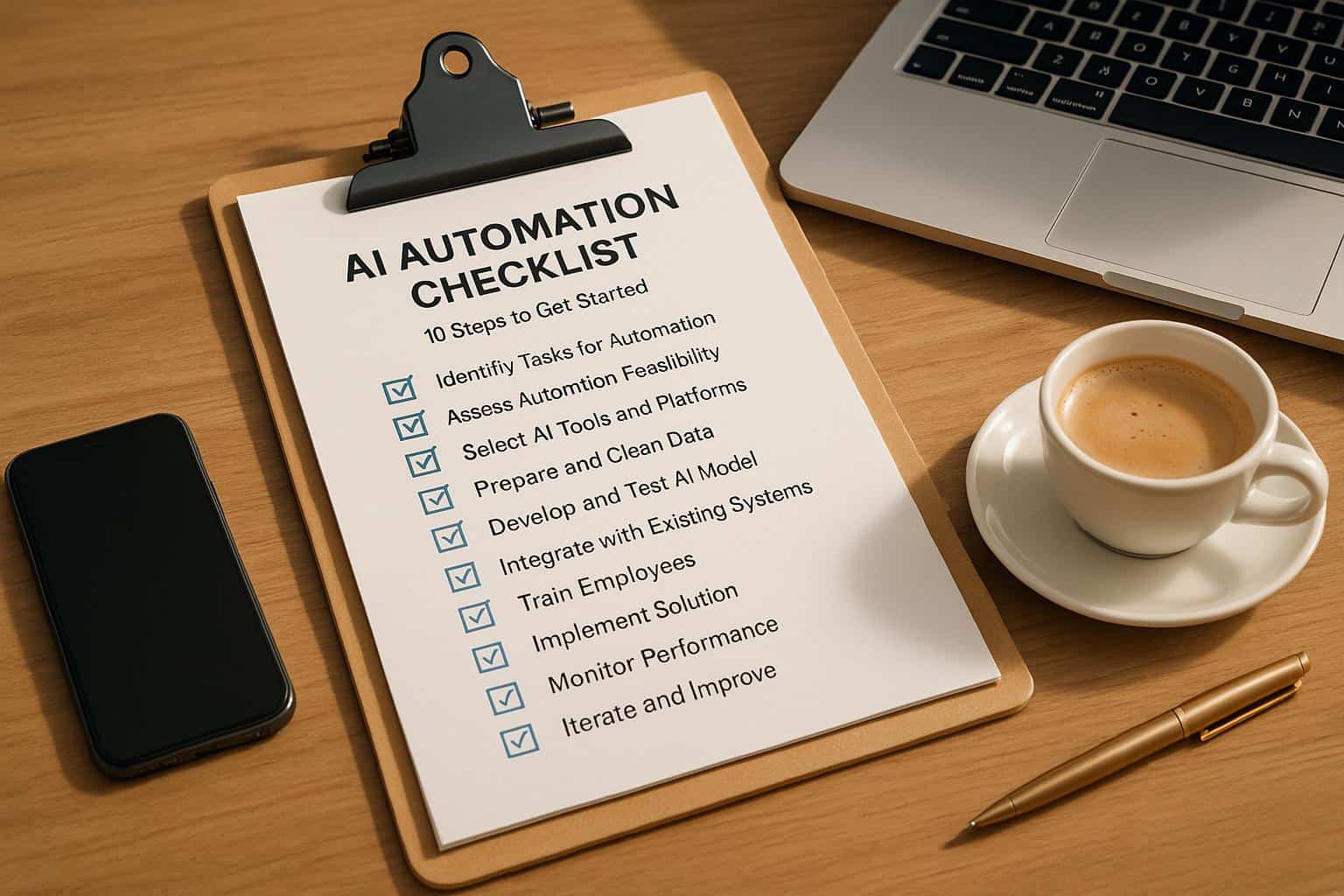
AI automation can help you create passive income by handling tasks like content creation, customer management, and payment processing. Here’s a quick breakdown of the 10 steps to build your first automated income stream:
- Set Income Goals: Define a clear monthly target, like $500 or $2,000, and break it into smaller milestones.
- Pick a Profitable Niche: Use AI tools to find low-competition, high-demand niches that align with your skills.
- Set Up AI Tools: Choose tools like ChatGPT for writing, Canva for visuals, and Zapier for automation.
- Automate Content Creation: Generate tailored blog posts, social media updates, and videos, ensuring quality and relevance.
- Set Up Affiliate Marketing: Join U.S.-based affiliate networks like Amazon Associates to earn commissions.
- Use No-Code Tools to Scale: Platforms like Zapier and Make can streamline workflows and save time.
- Track Performance: Monitor metrics like revenue, traffic, and conversions using dashboards and analytics tools.
- Handle Legal and Tax Requirements: Report income, track expenses, and comply with U.S. tax laws.
- Update Automations Regularly: Keep systems efficient by reviewing and improving workflows.
- Expand Income Streams: Add digital products, explore new platforms, and diversify revenue sources.
5 AI Passive Income Ideas – How To Make $37k per Week
Step 1: Set Your Income Goals
Before diving into AI tools, take a moment to define your financial target. A clear income goal will guide every decision you make, from selecting a niche to prioritizing specific income streams.
Start by asking yourself: How much do I want to earn each month? Be specific with your goals – something like "$500 per month within three months" or "$2,000 per month by the end of the year." These benchmarks not only help you measure progress but also keep you motivated as you build your systems.
Your target will also determine the time and effort you’ll need to invest. For instance, a goal of $500 per month might be achievable through a single income stream, such as affiliate marketing via a niche blog. But if you’re aiming for $5,000 per month, you’ll likely need to combine multiple streams, like affiliate commissions, digital product sales, and ad revenue.
Choose income streams that align with your skills and comfort level. Each option – whether affiliate marketing, ad revenue, or selling digital products – comes with its own set of advantages and risks. Think about what suits your strengths and how much time you can realistically commit.
Time is another crucial factor. If you’re working part-time, you might expect to earn $300 to $500 within 90 days. A full-time focus, however, can accelerate your growth and help you reach higher targets faster.
Break your target into smaller, manageable milestones. For example, if your goal is $1,200 per month, divide it into daily or weekly benchmarks. Suddenly, the goal feels more attainable, and you can track your progress regularly. If you notice you’re falling behind, you’ll have the opportunity to tweak your approach.
Don’t overlook your expenses. Many AI tools and automation platforms come with monthly fees. Starting out, you might need to budget $50 to $150 per month for software. So, if your goal is $500 per month, your net income could range from $350 to $450 after these costs. As you scale up, your profit margins are likely to improve since many tools offer discounts or better pricing for higher usage levels.
Lastly, align your goals with your risk tolerance and available resources. Some income streams require upfront investments, like purchasing a domain, hosting, or premium AI tools, while others allow you to get started with free options and scale as you grow.
Once your goals are clear and you’ve chosen your primary income stream, you’re ready to set up your AI tools.
Step 2: Pick a Profitable Niche
Your niche is the backbone of your project – it shapes the content you create, the audience you connect with, and the income you can generate. The sweet spot for a niche lies where there’s active search demand but less competition. This is where AI tools can save you time and effort by identifying opportunities quickly.
Start by reflecting on your own interests and skills, then check if there’s market demand. Specifically, focus on what U.S. audiences are searching for and whether they’re willing to spend money in that area. AI-powered research tools can make this process much easier.
Begin brainstorming with AI tools like ChatGPT. Use targeted prompts such as “trending printable planner ideas for teachers” or “niche eBook topics for busy parents.” For example, in May 2025, Income AIcademy used ChatGPT and keyword research tools to uncover a niche: "Printable meal planners for CrossFit moms." This was a highly specific and underserved market that performed better than broader topics.
Once you have a few ideas, dig deeper into the data. AI keyword tools like SurferSEO, SEMrush, Ahrefs, or Frase AI can help you find high-volume, low-competition long-tail keywords. These specific phrases not only face less competition but also attract visitors who are closer to making a purchase decision.
AI tools can also help you identify emerging trends before they hit their peak. In October 2024, research using nine large language models, including ChatGPT 4.0, highlighted niches like "AI-driven marketing content for e-commerce stores" and "Tech startup newsletters." These areas were ideal for subscription-based content automation, emphasizing the importance of consistent, high-quality content. Getting in early on a growing niche can give you a major edge.
Beyond keyword data, check forums, Reddit threads, social media activity, and Facebook groups for discussions in your niche. Browse marketplaces like Amazon and Etsy to see if related products are selling well. If you find active buyers and consistent interest, you’ve likely found a profitable niche. Keep in mind that year-round niches provide steady income, while seasonal ones, like "Christmas gift ideas", may cause fluctuations.
Test your niche by creating 3–5 SEO-optimized content pieces. Monitor their performance over 30–60 days to see if traffic and engagement grow. If the numbers look promising, you’re on the right track.
Take this example from 2025: A content creator grew her site’s monthly income from $200 to nearly $3,000 by publishing AI-assisted articles targeting an underserved digital product niche. She eventually sold the site for $59,000. As Income AIcademy explained:
"I used AI (mostly keyword research tools and ChatGPT) to dig deep on trends and underserved digital product niches."
Another example involves a travel planning website. Its owner used AI to compile a database of unique destinations and automate email follow-ups. This led to a 60% boost in bookings while cutting down on time spent managing inquiries.
Your niche should also fit your monetization strategy. If you’re aiming for affiliate marketing, ensure there are relevant programs with good commission rates. For digital products, confirm that people are willing to pay for solutions in your chosen area. If ad revenue is your goal, focus on niches with broad appeal to drive higher traffic.
Once you’ve validated your niche, you’re ready to set up AI tools and take the next step.
Step 3: Set Up Your AI Tools
After validating your niche, the next step is to assemble your AI toolkit. The right combination of tools can take over repetitive tasks, streamline workflows, and track results, freeing you to focus on strategy. If you’re based in the U.S., it’s especially important to select tools that support dollar-based pricing, standard date formats (MM/DD/YYYY), and smooth integration with American payment systems and platforms.
Start by exploring Your Automated Life, a platform designed for beginners in AI automation. It offers no-code workflows with step-by-step instructions and includes 10 ready-to-use automations. This lets you experiment before committing to upgrades.
For content creation, ChatGPT is a versatile writing assistant. It can help you craft blog posts, social media captions, email campaigns, and product descriptions. The trick is to master prompt writing. For example, instead of a vague request like "write a blog post about meal planning", try something more specific: "Write a 1,500-word blog post for busy parents on meal planning with a $200/week budget, including 5 time-saving tips and 3 affordable recipes." The more detailed your prompt, the better the results.
When it comes to visuals, Canva’s AI tools are a game-changer. Its Magic Design feature allows you to create social media graphics, Pinterest pins, and YouTube thumbnails with just a few text inputs.
For automating workflows, Zapier is a must-have. It connects your tools and sets up "Zaps" to trigger actions across platforms. For instance, you can automate tasks like adding new email subscribers to your CRM, sharing blog posts on social media, or sending welcome emails to new customers.
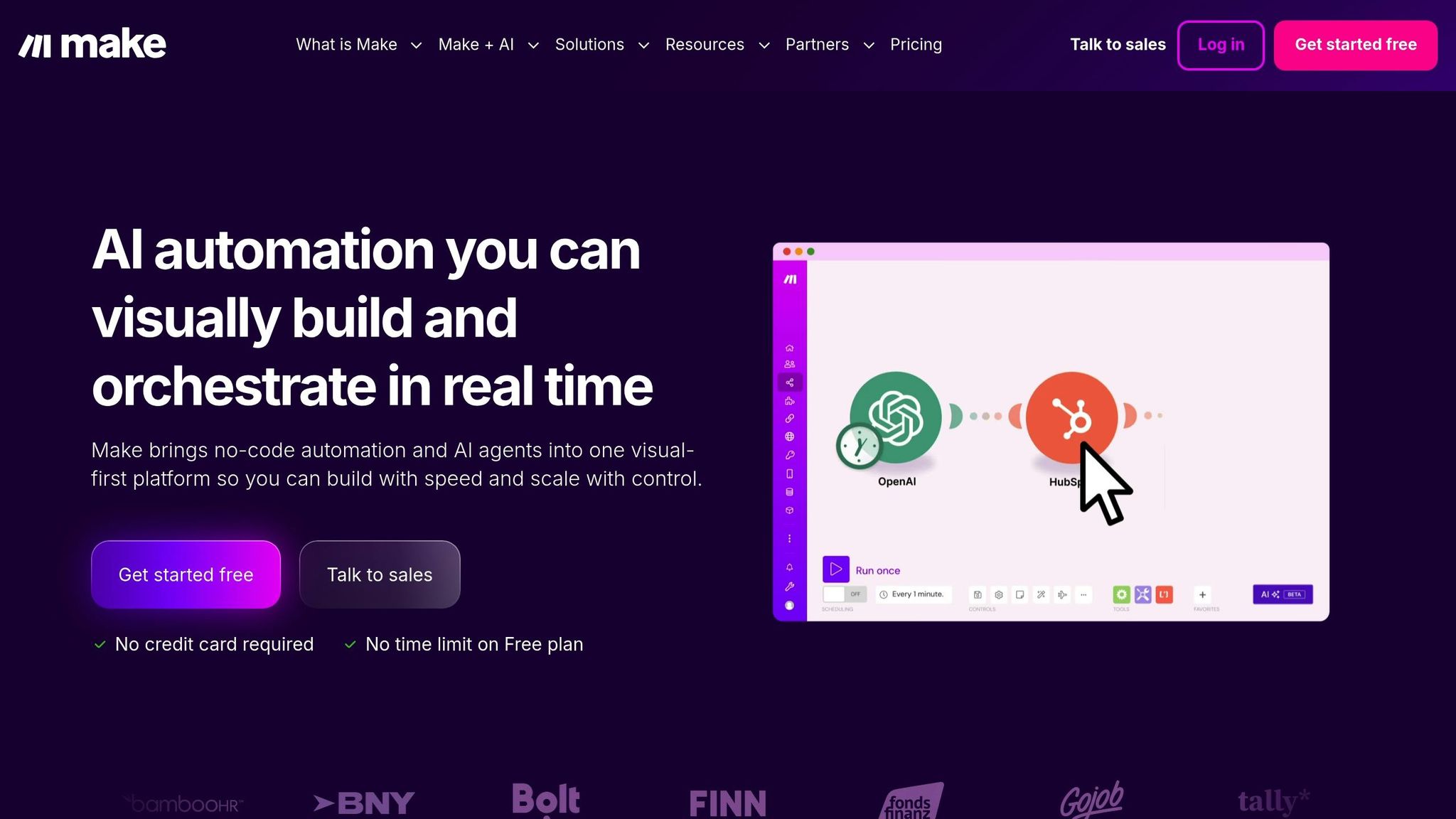
If you need more complex automation, Make (previously known as Integromat) is an excellent option. Its visual workflow builder lets you design detailed processes, from content creation to payment handling, making it ideal for building intricate income systems.
Email marketing platforms like ConvertKit and Mailchimp are tailored for U.S. users. Both offer dollar-based pricing, comply with U.S. email regulations (like the CAN-SPAM Act), and integrate easily with American payment processors. They also use AI to optimize send times and suggest engaging subject lines to improve open rates.
For improving your SEO and content performance, tools like SurferSEO and Frase AI are invaluable. They analyze high-ranking content and provide data-driven suggestions, such as keyword difficulty and search volume, to help your content perform better in U.S.-specific Google searches.
Notion AI is perfect for managing projects, tracking tasks, and organizing content calendars. Its AI features can summarize notes, generate action items, and draft outlines. Plus, Notion’s database tools let you track income, expenses, and performance metrics, formatted for U.S. currency.
If your content strategy includes video, Descript is a standout choice. It combines transcription, editing, and AI voice generation, allowing you to create faceless YouTube videos, podcasts, or course materials. Its timestamp formatting uses the standard U.S. 12-hour clock with AM/PM, making it ideal for local audiences.
When setting up your tools, focus on creating a seamless system. For example, you can use ChatGPT to draft a blog post, Canva to design an accompanying image, Zapier to publish it automatically, and ConvertKit to notify your email list. The goal is to have your tools work together effortlessly.
Take advantage of free plans and trial periods to test out features before committing to premium upgrades.
Lastly, use a dedicated business email for account setups, and ensure all payment methods are set to process in U.S. dollars. This avoids currency conversion fees and simplifies bookkeeping during tax season. While many platforms automatically detect your U.S. location and adjust settings, it’s always a good idea to double-check that your preferences for date, time, and currency formatting are correct.
With your AI toolkit ready, you’re all set to start automating content creation and building your passive income streams.
Step 4: Automate Your Content Creation
When automating content for U.S. audiences, tailoring every detail to American standards is key. With your AI tools ready, you can start generating blog posts, social media updates, and even videos around the clock. However, every AI-generated piece needs a human touch – review it for quality and cultural fit before it goes live.
Start with blog content, the backbone of your passive income strategy. Tools like ChatGPT can help, but the magic lies in how you structure your prompts. Be specific: instead of asking for "a fitness guide", try "a 2,000-word fitness guide for suburban Americans using imperial measurements, including a 5-mile running plan and weight training with 25-pound dumbbells." This ensures the content uses miles instead of kilometers, pounds instead of kilograms, and Fahrenheit instead of Celsius – standards that resonate with U.S. readers.
Make sure to specify American English spelling in your prompts. For example, use "color" instead of "colour" and "traveled" instead of "travelled." The same goes for terminology: Americans live in "apartments", not "flats", shop at "stores", not "shops", and snack on "cookies", not "biscuits." These small details make a big difference in connecting with your audience.
For social media automation, create posts that align with American holidays and cultural moments. A post about Memorial Day BBQ tips (featuring grill dimensions in inches and temperatures in Fahrenheit) will perform much better than generic summer content. Use AI to generate a month’s worth of posts and schedule them using automation tools. Remember to format dates as MM/DD/YYYY and times in a 12-hour clock with AM/PM.
Video content also needs to follow U.S. standards. Mention "2×4 lumber", "square footage", and temperatures in Fahrenheit. AI tools like Descript can help you create narrated videos, but you’ll need to tweak scripts for American phrasing. For example, "a comfortable 72°F" feels more relatable to U.S. viewers than "22°C."
Automation becomes seamless when you connect all these elements. For instance, draft a blog post with ChatGPT using American conventions, design Pinterest pins in Canva with inch-based dimensions (1,000 x 1,500 pixels works well), and set up a Zap to automatically publish the post, share it on social media, and email it to your subscribers via ConvertKit.
Even with automation, human oversight is non-negotiable. Research shows that businesses using AI-generated content can see profit margins up to 70% higher than traditional methods due to reduced labor costs. Spend 15–30 minutes reviewing each piece of AI-generated content. Check for factual accuracy, ensure measurements and dates are correct, and verify that the tone aligns with your brand. This review process ensures your content meets U.S. standards and sets the stage for localized affiliate marketing.
Cultural relevance goes beyond measurements and spelling. For financial content, reference 401(k) plans and IRAs instead of pension schemes. For recipes, use cups and tablespoons, not milliliters. When discussing distances, think in terms of city blocks or football fields – references that immediately resonate with American readers.
Prompt engineering is your secret weapon for localization. For example: "Write a 1,200-word article about apartment gardening for U.S. renters. Use American English, imperial measurements, MM/DD/YYYY dates, and reference USDA hardiness zones." Specific prompts like this help the AI generate content that feels authentically American.
Extend automation to affiliate marketing by tailoring product details for U.S. audiences. Mention standard U.S. outlet voltages (110–120V), appliance dimensions that fit American countertops, and prices in dollars. For instance, a stand mixer review should highlight its 5-quart capacity, not 4.7 liters.
Email automation also requires localization. When mentioning business hours, specify Eastern, Central, Mountain, or Pacific time zones. For promotions, format deadlines as "11:59 PM EST on 12/31/2025" instead of using 24-hour time or ambiguous date formats.
AI should support your efforts, not replace your voice. Use it to draft content, then refine it with your personal insights. For example, a post about "fall activities" should include references to football season, pumpkin spice trends, and Thanksgiving preparations – topics that resonate with an American audience.
Create content templates that include localization requirements. A master prompt document might include phrases like "use American English", "imperial measurements only", "MM/DD/YYYY date format", and "reference U.S. tax year (January 1–December 31)." Copy these specifications into every AI request to maintain consistency.
Track what types of localized content perform best with your audience. Posts tailored to specific U.S. regions – like "tips for humid Southern summers" or "winter prep for Midwest homeowners" – may outperform generic national content. Use this data to refine your prompts over time.
Finally, remember that personalization is essential to keeping AI-generated content engaging. Add personal anecdotes, update examples with current events, and inject your unique perspective. While automation handles the heavy lifting, your voice is what makes the content truly connect with readers.
With your content creation automated and localized, you’re ready to move on to setting up automated affiliate marketing systems.
Step 5: Set Up Automated Affiliate Marketing
Setting up automated affiliate marketing can help you earn commissions with minimal ongoing effort. For U.S.-based users, it’s smart to pick affiliate networks that operate in dollars and cater to U.S. consumer habits. Some popular choices include Amazon Associates, ShareASale, and CJ Affiliate. These platforms let you promote products while offering automated tracking tools to keep tabs on your performance. It’s a great way to build a system that generates passive income.
To make things even smoother, consider affiliate networks that work well with reliable payment platforms. In the U.S., many marketers prefer PayPal for receiving affiliate payouts due to its widespread use and ease of integration. Linking your affiliate networks to PayPal or similar platforms can simplify your workflow and ensure seamless transactions.
Don’t forget to periodically review and tweak your setup to stay on track with your income goals.
sbb-itb-4bfa3ba
Step 6: Use No-Code Tools to Scale
Once you’ve set up your core AI tools and affiliate marketing strategies, no-code platforms can help you scale your passive income systems quickly and effectively. These platforms allow you to connect apps and automate workflows in minutes, eliminating the need for coding skills or hiring developers. It’s a fast-track solution to building more efficient systems without the usual technical hurdles.
No-code tools work seamlessly with your existing AI setup, making it easier to expand your operations. Take Zapier, for example – one of the most widely used no-code automation platforms in the U.S. Zapier connects over 5,000 apps and services, enabling you to create automated workflows (called "Zaps") that execute tasks based on specific triggers. Imagine this: when someone buys your digital product on Gumroad, Zapier can automatically add their email to your Mailchimp list, update a Google Sheet for record-keeping, and send a welcome email – all without you lifting a finger.
For entrepreneurs in the U.S., integrating these tools with e-commerce platforms can be a game-changer. For instance, you can connect Shopify with accounting software like QuickBooks Online to automatically sync sales data, track expenses, and prepare for tax season. This eliminates manual data entry and reduces the risk of errors. Similarly, linking Stripe, a popular payment processor, with your CRM ensures every transaction is logged, and customer data is well-organized.
No-code platforms also simplify reporting by consolidating data from multiple sources. By connecting tools like PayPal, Stripe, and your bank accounts to Airtable or Google Sheets, you can create a unified dashboard to track your earnings in real time. This makes it easier to identify which income streams are thriving and where you might need to adjust your efforts.
Another valuable application is automating customer support. By integrating your email inbox with an AI chatbot platform, you can ensure common questions are answered instantly while more complex issues are flagged for your attention. This keeps your customers satisfied without requiring you to be available around the clock.
The beauty of no-code tools is their adaptability as your business grows. You can start with simple automations, like scheduling social media posts, and gradually move to more complex workflows that handle lead generation, payment processing, and customer onboarding. These tools grow with your needs, allowing you to expand your systems without overcomplicating things.
Most no-code platforms offer free plans, making it easy to test their capabilities before committing to a paid subscription. For example, Zapier’s free tier allows for 100 tasks per month – perfect for beginners to explore and experiment. As your passive income increases, upgrading unlocks advanced features like multi-step workflows and integrations with premium apps.
The key is to identify repetitive tasks and automate them. Focus on processes that save time and increase revenue. With the right no-code tools, you’ll not only streamline your operations but also position your business for sustainable growth. These automations complement your existing systems and lay the groundwork for scaling even further.
Step 7: Track Your Performance
Once your AI automation is up and running, tracking its performance becomes essential to keep your business growing. Performance tracking helps you understand what’s working, what’s not, and where you should focus your efforts. Without keeping an eye on the numbers, improving results becomes almost impossible. With the right tools and strategies, you can get a clear snapshot of your business’s health in just a few minutes, allowing you to fine-tune your AI systems as you scale.
Start by identifying the key metrics that matter most to your passive income streams. For subscription-based models, Monthly Recurring Revenue (MRR) highlights consistent income trends. If you’re selling digital products, focus on traffic and conversion rates – these reveal how effectively you’re turning visitors into paying customers. For affiliate marketing or paid advertising campaigns, tracking Return on Investment (ROI) ensures your spending aligns with your goals. Keep your revenue data in USD, formatted with commas for thousands and periods for decimals (e.g., $1,234.56), and use the MM/DD/YYYY date format (e.g., 11/27/2025) to avoid confusion when analyzing reports from multiple sources.
To simplify tracking, consider building a customized dashboard that consolidates all your data. Tools like Google Data Studio or Tableau can help you visualize trends in income, conversion rates, and engagement metrics in real time. By pulling data from your e-commerce platform, affiliate networks, ad accounts, and email marketing tools, you’ll have a comprehensive view of your operation in one place.
AI can take your tracking a step further with predictive analytics. Instead of just reviewing past performance, predictive tools can forecast future revenue based on current trends. This allows you to make proactive decisions about where to invest your time and resources. Businesses that use predictive analytics often see up to 73% higher revenue growth. These insights are invaluable when refining your automated income streams.
Take Wayfair, for example. They used machine learning to overhaul their product tagging system across more than 40 million products. The result? Tagging was 10 times faster compared to manual methods, with improved accuracy that enhanced search results for customers. While your business may not operate on the same scale, the lesson is clear: effective tracking paired with data-driven optimization can lead to significant improvements.
Beyond overall revenue, pay close attention to specific income streams like affiliate commissions and ad revenue. These can fluctuate due to seasonal trends, algorithm updates, or changing market conditions. Tracking them separately allows you to spot which areas are stable and which might need adjustments.
Financial metrics are important, but don’t forget about engagement metrics – these reveal how your audience interacts with your content. Monitor email open rates, click-through rates, social media engagement, and time spent on your website. These numbers can tell you whether your AI-generated content is resonating with your audience or if adjustments are needed. Similarly, keep an eye on your search engine rankings. Drops in visibility for key terms could lead to fewer visitors and lower revenue, so regular checks are crucial.
Set up dashboards that display both short-term and long-term trends. For example, track daily fluctuations alongside yearly patterns to get a complete picture of your business’s performance. Automate financial updates by connecting tools like Stripe and PayPal to your dashboard so every transaction updates your revenue totals in real time. You can also integrate affiliate networks to monitor commissions as they come in. To stay on top of potential issues, set up alerts for key thresholds – like if daily revenue drops below $100 or conversion rates dip significantly – so you can act quickly.
Don’t forget to track the efficiency of your AI automations. Measure the time they save, the number of tasks they complete, and whether they maintain quality standards. Regular performance checks will ensure your systems continue to operate smoothly and effectively.
Use your data to experiment. Test different pricing strategies, content formats, or promotional campaigns, and measure the results. By analyzing the data, you’ll be able to make informed decisions and adjust your approach to maximize results.
Finally, make performance tracking a habit. Set aside a consistent time – whether it’s Monday mornings or Friday afternoons – to review your dashboard. Regular monitoring helps you catch potential problems early and seize opportunities before they pass.
Step 8: Handle Legal and Tax Requirements
Earning passive income through AI automation isn’t just about generating revenue – it comes with real responsibilities. The IRS doesn’t care if your income comes from a 9-to-5 job or automated systems – it all needs to be reported. Overlooking tax obligations or legal requirements can lead to penalties, audits, and unnecessary financial stress.
Reporting Your Income
First things first: all online income is taxable. Whether it’s affiliate commissions, digital product sales, ad revenue, or subscription earnings, every dollar must be reported. Even if you haven’t received tax forms yet, you’re still legally required to disclose your earnings.
Pay close attention to 1099 forms, which play a major role for online entrepreneurs. If you earn $600 or more from a platform or client, you’ll likely receive a 1099-NEC or 1099-K. The latter applies if you surpass $20,000 in gross payments and 200 transactions. Keep these forms handy for your April 15 tax filing. However, even if you don’t receive a 1099, you’re still responsible for reporting that income. Detailed records – like transaction dates, amounts in USD (e.g., $1,234.56), and sources – are essential. If you’ve been following Step 7 with a tracking dashboard, you’re already ahead of the game.
Handling Taxes as a Self-Employed Individual
As a self-employed individual, you’ll need to account for Social Security and Medicare taxes, which total 15.3% and are reported on Schedule SE. The good news? You can deduct half of this tax from your gross income, which helps reduce your overall tax burden.
If you anticipate owing $1,000 or more in taxes for the year, you’ll need to make quarterly estimated payments on April 15, June 15, September 15, and January 15 using Form 1040-ES. Skipping these payments could result in penalties and interest charges, so mark those dates on your calendar.
Deductions and Business Expenses
Tracking business expenses can significantly lower your taxable income. For AI automation businesses, common deductions include:
- Software subscriptions and tools
- Domain names and hosting fees
- Advertising and marketing costs
- Professional services like accountants or legal advisors
- Office supplies
- A portion of your home internet if you work from home
If you have a dedicated home office used exclusively for your business, you might qualify for the home office deduction. Keep receipts and documentation for all expenses – if the IRS audits you, you’ll need proof.
Choosing the Right Business Structure
Most beginners start as sole proprietors, reporting their income on Schedule C. As your income grows, consider forming an LLC to protect your personal assets or an S Corporation to reduce self-employment taxes. Setting up an LLC typically costs between $50 and $500, depending on your state.
Sales Tax and Compliance
If you’re selling digital products, sales tax rules can get tricky. Some states require sales tax on digital goods, while others don’t. Selling physical products adds another layer of complexity. Research your state’s rules and consider using automated tools to calculate and collect sales tax based on your customers’ locations. You’ll also need to register for a sales tax permit in states where you have a business presence, known as nexus.
Legal Documents and Privacy Policies
If you collect user data, you’ll need clear privacy policies and terms of service. While online templates are available, having an attorney review and customize these documents for your business offers better protection.
For affiliate marketing, ensure you comply with the Federal Trade Commission (FTC) guidelines by clearly disclosing affiliate relationships. For example, include a statement like, “This post contains affiliate links, which may earn a commission,” in a prominent location.
Copyright and AI-Generated Content
Using AI to create content introduces legal gray areas. Copyright laws for purely AI-generated works remain unsettled. If you’re incorporating copyrighted material – like images, music, or text – ensure you have the proper licenses or permissions. Violating copyright laws can lead to lawsuits and harm your reputation.
Simplifying Bookkeeping
Keeping your personal and business finances separate is crucial. Open a dedicated business bank account and credit card to streamline bookkeeping and reinforce the legal separation between personal and business assets. This makes tax preparation easier, provides clear documentation during audits, and helps establish business credit.
The IRS recommends keeping tax records for at least three years from the date you filed your return, though some cases may require longer retention. Store digital copies of receipts, invoices, bank statements, and tax documents in a secure, backed-up location. Cloud storage solutions are a great option for this.
For easier record-keeping, tools like QuickBooks Self-Employed or FreshBooks can automatically categorize expenses, track mileage, and generate reports. These tools often sync directly with your bank accounts and credit cards, saving you from manual data entry.
Insurance and Professional Advice
Even if you’re just starting out, insurance can protect your business as it grows. Consider these options:
- General liability insurance: Covers claims of bodily injury or property damage.
- Professional liability insurance: Protects against claims that your advice or services caused financial harm.
- Cyber liability insurance: Covers costs related to data breaches or cyberattacks.
For tax and legal advice, consult professionals. A CPA (Certified Public Accountant) or enrolled agent can identify deductions you might miss, ensure compliance, and represent you if the IRS has questions. Similarly, a business attorney can help with setting up your business structure, drafting contracts, or handling legal issues. Many attorneys offer initial consultations at reduced rates – or even free.
Stay Ahead of Legal and Tax Obligations
Don’t wait until tax season to address these responsibilities. Set up systems now: open a business bank account, track expenses, research state requirements, and create necessary legal documents. Taking these steps early on will save you from scrambling later and ensure your automated income is built on a solid foundation.
Step 9: Update Your Automations Regularly
Once you’ve set up your tracking and legal frameworks, keeping your automations updated is key to maintaining a steady flow of passive income. AI automations are not a "set it and forget it" solution – they need consistent attention. With AI tools evolving rapidly, platforms introducing new features, and your business priorities shifting, neglecting updates can lead to inefficiencies or even system failures.
Why Regular Updates Are Important
The pace of AI development is relentless. Tools that seemed advanced just a few months ago might now offer new features that could save time or improve performance. Platforms frequently update their APIs and pricing structures, and failing to adapt can lead to setbacks. In fact, up to 70%-80% of AI projects fail due to lack of maintenance. Regular updates ensure your systems stay relevant, efficient, and competitive.
Setting Up a Review Schedule
Dedicate specific time slots to review your automations, treating these sessions like any other important business meeting. A good approach is:
- Weekly Check-Ins: Spend 30 to 60 minutes monitoring performance and making quick fixes.
- Monthly Deep Dives: Reserve two to three hours for a more thorough analysis and updates.
Choose consistent days and times for these reviews, and add reminders to your calendar to stay on track. These recurring sessions will help you maintain the reliability of your systems and prepare them for future growth.
Weekly Review Checklist
During your weekly reviews, focus on quick performance checks and minor adjustments:
- Monitor Key Metrics: Review your dashboards for any unusual drops and address them immediately.
- Verify Content Automation: Ensure social media posts, email campaigns, and blog updates are publishing as planned.
- Test Affiliate Links: Click through your links to confirm they work correctly and include your affiliate ID.
- Check for Errors: Look for error notifications from your tools and fix small issues before they escalate.
Monthly Deep Dive Focus Areas
Monthly reviews are your chance to dig deeper into your systems and make strategic updates:
- Analyze Trends: Compare month-to-month performance and set growth goals for the next 30–60 days.
- Explore New Tools: Stay informed about updates or new AI features by subscribing to newsletters or joining online communities.
- Gather Feedback: Use audience comments, email responses, or support inquiries to identify areas for improvement.
Tracking Key Metrics
Keep a simple log to track important metrics like time saved, error rates, and user engagement. Use a spreadsheet or document to record these figures alongside notes about any changes. For example, log entries with a date format like "03/15/2025" to easily spot trends and measure the impact of your updates.
Staying Updated with AI Advancements
AI technology evolves quickly, so staying informed is essential:
- Set aside time each week to read industry updates.
- When testing new tools or features, start small before fully integrating them into your systems.
- Focus on tools that address specific problems or improve existing workflows.
Adapting to Platform Changes
Platforms frequently roll out updates, and staying proactive can save you from disruptions:
- Read release notes or watch tutorial videos to understand changes.
- Adjust settings or rebuild integrations as needed.
- Enable alerts for major updates on key platforms to stay informed.
Documenting Changes
Keep detailed records of every adjustment you make:
- Log changes with the date and a brief description (e.g., "03/15/2025 – Updated email sequence with new product recommendations").
- Back up workflows before making major changes. Many platforms allow you to duplicate workflows or export configurations, so you can easily revert if needed.
The Risks of Neglect
Failing to maintain your automations can lead to broken links, outdated content, and wasted resources. Regular updates not only keep your systems running smoothly but also help you seize new opportunities for growth.
Building the Habit
Start small and gradually build your review routine:
- Begin with a 15-minute session to check key metrics and dashboards.
- As you get comfortable, extend these sessions for deeper analysis.
- Share your review schedule with a trusted partner or join a community of entrepreneurs to stay accountable.
Step 10: Expand Your Income Streams
Once your automations are running smoothly, it’s time to think about diversifying your income. Relying on just one revenue source can be risky. By adding multiple streams, you create a business that’s better equipped to handle market changes and platform shifts.
Why It’s Smart to Diversify
Think of income streams like a financial portfolio. Just as savvy investors spread their money across different assets, successful entrepreneurs build multiple revenue channels. This approach not only protects your income if one source slows down but also boosts your overall earning potential.
Make the Most of What You Have
Start by building on your existing efforts. For instance, if you already blog about productivity tools, consider branching out into related topics your audience cares about. Your current systems and AI tools make it easier to add complementary affiliate partnerships or other offerings without starting from scratch. Tailoring your approach to regional U.S. preferences can also help you connect with a broader audience.
Create Digital Products
Digital products like e-books, guides, templates, and online courses come with high profit margins since you keep most of the revenue. AI tools can help you draft content, structure courses, or design templates, so you can focus on adding your personal expertise. When pricing these products, consider how much detail, value, and effort went into creating them.
Customize Content for Regional Audiences
The U.S. market is far from uniform, and tailoring your content to different regions can open up new opportunities. AI can help you adjust your messaging to suit urban versus rural audiences or adapt to local consumer habits and regulations. Even something as simple as scheduling posts to align with regional peak activity times can improve your engagement.
Use Multiple Platforms
Don’t limit yourself to just one platform. Social media networks, content platforms, and online marketplaces each offer unique ways to generate revenue. For example, AI tools can simplify YouTube automation by helping with scriptwriting, voiceovers, and editing tips. Each platform has its own monetization options, and using several of them can give your income a boost.
Email lists are another powerful tool. Once you’ve built a solid subscriber base, you can monetize it by promoting your own products, offering premium content, or even securing sponsorships. Podcasts work similarly – grow your audience, and sponsorships often follow. AI tools can assist with tasks like scripting and audio editing, making the process more efficient.
Experiment with New Revenue Models
Test new income ideas on a small scale first. Track your time, costs, and revenue to determine what works. Set clear goals so you can measure success and decide whether to expand or pivot.
Automate Your Cross-Promotion
Your existing automation systems can help promote new income streams. For example, you can integrate mentions of new products into your current content. AI tools can identify natural points for these mentions, and automated email sequences can introduce new offerings gradually, so your audience doesn’t feel overwhelmed.
Stay Organized as You Scale
Adding more income streams means more complexity. Keep track of your revenue, time spent, and conversion rates for each channel. This helps you identify what’s working and what might need to be rethought or even dropped if it’s not worth the effort.
Know When to Pull Back
While expanding can increase your revenue, taking on too much can hurt your focus. Each new stream needs time and attention to set up and maintain. Many entrepreneurs find that sticking to a few well-integrated income channels allows them to maintain quality and avoid burnout.
Take Advantage of Seasonal Trends
The U.S. market has predictable seasonal trends that can temporarily boost your income. Back-to-school shopping, holiday sales, and New Year’s resolutions are all periods of increased consumer spending. By planning automated campaigns ahead of these times, you can make the most of these opportunities without overhauling your systems every season.
Build Income That Lasts
Long-term income streams often work together. For example, engaging blog content can grow your email list, which can then promote your digital products or services. Repurposing content is another way to maximize your efforts – turning a video into a blog post or breaking down a guide into social media snippets can extend the life of your work. AI tools make it easier to transform one piece of content into multiple formats, creating ongoing income opportunities from a single effort.
Conclusion
Building automated passive income systems isn’t a one-and-done task. It’s a process that requires regular tweaks and updates. The 10 steps in this checklist give you a structured approach: start by setting clear income goals and selecting a niche, then incorporate AI tools, automate your content, and integrate affiliate marketing systems. From there, you can scale with no-code platforms, monitor your performance, ensure compliance with tax regulations, and fine-tune your automations to keep things running smoothly.
This method creates a solid foundation for growth. Once your initial setup is in place, expanding becomes much easier. Automating content creation and affiliate marketing means you’re not starting from scratch each time you want to add a new income stream. Instead, you’re building on systems that are already working. With minimal effort, these systems can continue generating revenue for months – or even years. Each step in the checklist feeds into the next, forming a cycle of ongoing improvement.
To succeed in the U.S. market, adaptability is key. Consumer behaviors, platform algorithms, and AI tools are always evolving. What works today might need adjustments in six months. That’s why tracking performance and updating your systems is essential if you want your income streams to stay relevant and effective. Seasonal trends, like back-to-school shopping in August or holiday spending at the end of the year, offer predictable opportunities to boost revenue. Automation tools should be set up to take advantage of these patterns without requiring constant manual intervention.
The most successful automated income systems have one thing in common: they’re designed to evolve. Market conditions change, and so should your systems. Platforms like Your Automated Life provide step-by-step guides and pre-designed workflows to make implementation quicker, especially if you’re just starting out with AI-driven automation.
This isn’t a linear process – it’s a cycle. Automation frees you to focus on strategy while routine tasks handle themselves in the background. The goal is to create income streams that run with minimal oversight, but regular check-ins ensure everything stays on track. Use this checklist as a guide you can revisit often. As you grow and adapt to new opportunities, these steps will help you refine and scale your systems, keeping you ahead in the ever-changing world of passive income.
FAQs
What are the best AI tools to start automating content creation and management?
When you’re looking to simplify content creation and management, there are some impressive AI tools worth exploring. AI-driven content creation platforms can produce blog posts, social media updates, and even video scripts quickly and efficiently. Many of these platforms come with customizable templates and use natural language processing to create content that feels tailored to your needs.
To keep your content organized and on schedule, automation tools like social media schedulers and workflow managers are a game-changer. These tools often work seamlessly with the platforms you already use, helping you plan, publish, and monitor your content’s performance with minimal hassle.
If you’re new to this space, consider checking out no-code AI tools. These beginner-friendly options are designed to simplify the process, requiring little to no technical expertise. They allow you to scale your efforts without unnecessary complexity, so you can focus on building your passive income system effectively.
What steps should I take to ensure my AI-powered passive income systems comply with U.S. legal and tax regulations?
To keep your AI-driven passive income systems in line with U.S. legal and tax regulations, it’s essential to start by consulting a qualified tax professional or attorney with expertise in digital income and automation. They can provide guidance on correctly classifying your income, reporting your earnings, and managing deductions in compliance with U.S. tax laws.
It’s also important to review the IRS guidelines for self-employment income, as many passive income streams are categorized this way. Maintaining detailed records of all your transactions, expenses, and earnings will make tax filing much easier. If your systems handle customer data, ensure they comply with privacy laws such as the California Consumer Privacy Act (CCPA) and any relevant federal regulations. By addressing these legal and tax responsibilities early, you can avoid penalties and keep your automated income systems operating without interruptions.
How can I track and improve the performance of my AI-powered automation systems?
To keep your AI-powered automation systems running at their best, start by establishing specific performance goals. Focus on metrics like ROI, time saved, or conversion rates that directly support your passive income targets.
Leverage analytics tools to keep an eye on performance in real-time. Most automation platforms come with built-in dashboards that let you track data such as engagement rates, sales figures, or task completion times. Make it a habit to conduct regular reviews so you can spot trends and identify areas that need fine-tuning.
Don’t hesitate to experiment with small changes – adjust workflows, try out new tools, or refine AI-generated content. Regularly fine-tuning your systems ensures they stay efficient and continue delivering better results over time.